
When I found out I was pregnant with my first baby, I did what every first-time parent does.
I panicked.
Then I made lists. Endless lists. I registered for 147 items at three different stores. I read baby books. I joined Facebook groups. I asked everyone I knew what I absolutely had to buy.
Six months later, after my daughter was born, I looked around my house and realized something funny.
Half the stuff I bought? Never used it. That expensive bassinet that rocks itself? She hated it. The fancy bottle warmer? Unnecessary. The designer diaper bag? Too small and impossible to clean.
But there were about 15 things I used every single day. Things that made the difference between surviving and actually enjoying those first crazy months.
Now, three kids later, I know exactly what first-time parents actually need. Not what looks cute. Not what’s trending. Just the real stuff that works.
Here’s my honest list.
1. A Car Seat (This Is Non-Negotiable)
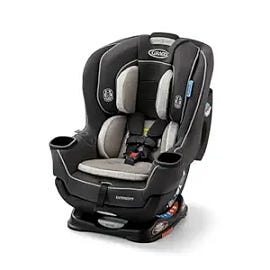
What it is: A special seat that keeps your baby safe in the car.
Why you need it: The hospital won’t let you leave without one. It’s literally the law. But more importantly, it could save your baby’s life.
My story: I spent three weeks researching car seats before my first baby. I read safety ratings. I watched installation videos. I drove to the fire station to make sure I installed it correctly.
My husband thought I was being paranoid. Then we saw a minor car accident on the way home from the hospital. The baby in the other car was completely fine because they were in a proper car seat.
That’s when it clicked for both of us. This isn’t just a baby product. It’s safety equipment.
What to look for: Get an infant car seat for newborns (they face backward). Make sure it’s not expired. Check that it fits your car before you buy it.
Important fact: Car accidents are the leading cause of death for children. A proper car seat reduces the risk of death by 71% for infants.
Price range: Basic safe options start around $80–120. Fancier ones with more padding cost $200–400. They’re all tested for the same safety standards.
Pro tip: Many fire stations and police departments will check your installation for free. Use them. Most car seats are installed wrong the first time.
2. Diapers (Way More Than You Think)
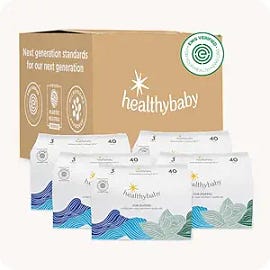
What it is: You know what diapers are. But what you don’t know is how many you’ll need.
The reality: Newborns go through 10–12 diapers per day. That’s 70–84 diapers per week. About 300–350 per month.
My story: Before my first baby came, I bought two packs of newborn diapers. I thought I was being prepared.
We ran out on day three.
At 11 PM, my husband was at the 24-hour drugstore buying diapers at full price because we had nothing left.
With my second baby, I bought 500 diapers before she was born. We still needed more by week three.
How many to buy: Start with at least 200 newborn size and 200 size 1. Sounds crazy, but you’ll use them.
Money-saving tip: Sign up for Amazon Subscribe & Save. You get 20% off diapers when you subscribe to regular deliveries. Cancel anytime.
Important note: Some babies are sensitive to certain brands. Buy a few different brands first to test before buying in bulk.
Price breakdown: A box of 100 diapers costs about $20–25. That’s about $0.20–0.25 per diaper. You’ll spend roughly $60–80 per month on diapers.
3. A Safe Place to Sleep (Not Your Bed)
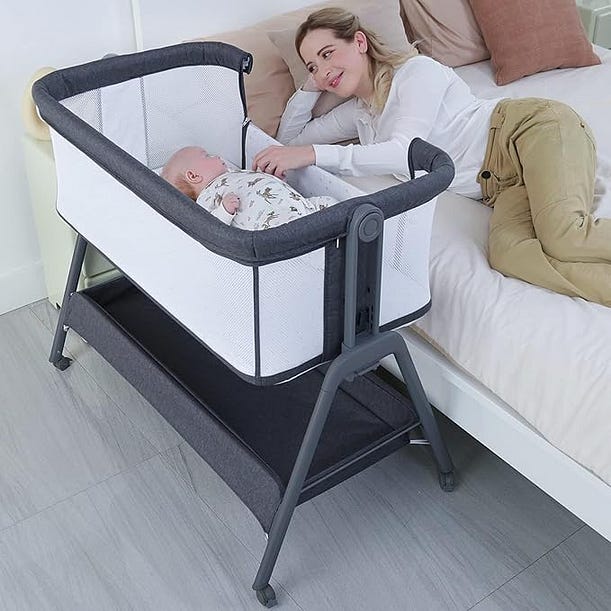
What it is: A bassinet, crib, or play yard where your baby sleeps safely.
Why you need it: Babies need a flat, firm surface with no blankets, pillows, or stuffed animals. Nothing else in there with them.
My story: I had romantic ideas about co-sleeping. Snuggling with my baby all night. Bonding.
Then my pediatrician explained the risks. Babies can suffocate in adult beds. The mattress is too soft. The blankets are dangerous. Parents can roll onto them.
We bought a bassinet that sat next to our bed. Close enough that I could reach over and touch her. Far enough that she was safe.
The options:
- Bassinet: Small, portable, fits next to your bed. Use for 0–4 months. Costs $50–200.
- Crib: Bigger, lasts longer (up to age 2–3). Costs $100–500.
- Pack ‘n Play: Portable, can use as bassinet and play area. Costs $80–150.
Safety fact: The American Academy of Pediatrics says room-sharing (baby in your room but in their own bed) reduces SIDS risk by 50%.
Pro tip: Put the bassinet or crib together before the baby comes. You don’t want to be reading instructions at 2 AM with a crying newborn.
4. Bottles and Nipples (Even If You Plan to Breastfeed)
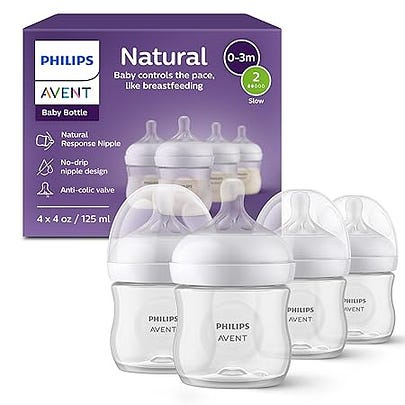
What it is: Plastic or glass bottles with rubber nipples for feeding.
Why you need it: Even moms who exclusively breastfeed usually need bottles sometimes. For pumped milk. For when someone else watches the baby. For emergencies.
My story: I was determined to only breastfeed. I didn’t even register for bottles.
By week two, I was exhausted. My husband wanted to help with feedings so I could sleep. But we had no bottles.
Emergency Amazon order at midnight. Two-day shipping felt like forever.
How many to buy: Start with 6–8 bottles. You’ll wash them constantly at first, so having extras helps.
What to look for:
- Newborn nipples (slowest flow)
- Anti-colic design (reduces gas)
- Easy to clean (fewer parts = better)
Price range: Basic bottles cost $5–8 each. Fancy anti-colic bottles cost $10–15 each. A starter set of 4–6 bottles costs $25–50.
Real talk: Babies are picky. Your baby might love the first bottle you try or reject five different kinds before accepting one. Start with a small variety pack.
5. Burp Cloths (At Least 20)

What it is: Small towels that catch spit-up and drool.
Why you need so many: Babies spit up constantly. After eating. An hour after eating. While you’re holding them. On your shoulder. Down your back.
My story: I registered for six burp cloths. Six! What was I thinking?
By day two, I’d used all six and was using kitchen towels as backup. By day five, I was using my husband’s old t-shirts.
I ordered a 24-pack on Amazon. Finally had enough.
How I used them:
- One on each shoulder (I’d forget which side I used)
- One under the baby’s head during tummy time
- One in the diaper bag
- Several as backup in every room
Cost: A pack of 10 costs about $15–20. Buy at least two packs. White ones are best because you can bleach them.
Pro tip: Keep them everywhere. Living room, nursery, car, diaper bag. You’ll always need one and never have one nearby.

6. Baby Clothes (But Not What You Think)
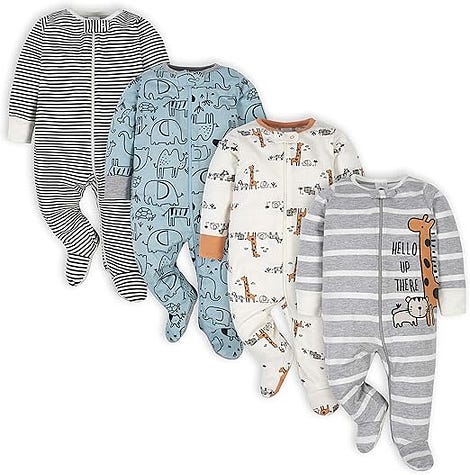
What you need:
- 7–10 onesies (short or long sleeve depending on season)
- 7–10 sleepers with zippers (not buttons)
- 2–3 sleep sacks
- 0 pants (seriously, skip pants for newborns)
Why zippers matter: At 3 AM when you’re changing a diaper, you don’t want to be dealing with 15 tiny snaps. Zippers save your sanity.
My story: People gave us the cutest baby outfits. Little jeans. Tiny button-up shirts. Miniature overalls.
My daughter wore onesies and sleepers for the first three months straight. The fancy clothes sat in the drawer with tags still on.
Size strategy:
- Skip newborn size (most babies grow out in 2–3 weeks)
- Buy mostly 0–3 months and 3–6 months
- Buy for the season they’ll actually wear it (6-month summer clothes in December won’t get used)
Money-saving fact: Babies grow crazy fast. Don’t spend a fortune on clothes they’ll wear three times. Carter’s and Old Navy have good quality for reasonable prices.
Important note: Wash all baby clothes before they wear them. New clothes have chemicals that can irritate sensitive skin.
7. A Good Baby Monitor
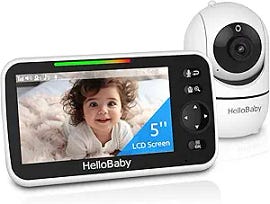
What it is: A camera and screen that lets you see and hear your baby from another room.
Why you need it: You can’t stare at your sleeping baby 24/7. But you want to know if they’re crying, awake, or need you.
My story: We bought a cheap $30 audio-only monitor at first. I couldn’t see the baby, just hear her.
I spent hours lying awake listening to static, wondering if she was okay. Every little sound made me run to her room.
We upgraded to a video monitor. Being able to see her sleeping peacefully let me actually relax and sleep.
What to look for:
- Clear video (even in the dark)
- Good range (works throughout your house)
- Temperature display (helps you know if the room is too hot or cold)
- Two-way talk feature (so you can talk to your baby without going in the room)
Price range: Basic video monitors cost $50–80. Fancy smart monitors with apps cost $150–300.
Pro tip: Test the range before the baby comes. Walk around your house with the monitor to make sure it works everywhere.
8. Wipes (Buy in Bulk)
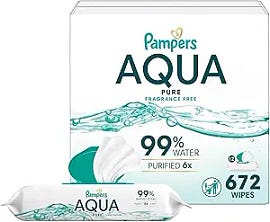
What it is: Pre-moistened cloths for cleaning during diaper changes.
The reality: You’ll use 8–10 wipes per day minimum. That’s 240–300 wipes per month. And that’s just for diaper changes.
Other uses I discovered:
- Cleaning spit-up off furniture
- Wiping hands after meals (later)
- Cleaning toys
- Emergency cleanup in the car
- Wiping down changing tables
My story: I bought one pack of wipes (72 count) before my baby came. It lasted five days.
Now I buy the boxes of 800–1000 wipes at a time. I always have at least two boxes in the house.
Cost comparison:
- Small packs (72 wipes): About $4 — That’s $0.055 per wipe
- Bulk boxes (900 wipes): About $25 — That’s $0.027 per wipe
Buying bulk saves you almost 50%.
Pro tip: Keep wipes everywhere. Nursery, living room, car, diaper bag. Running out mid-diaper-change is a nightmare.
9. A Baby Bathtub or Bath Support
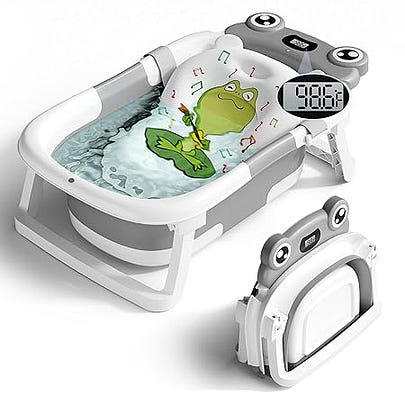
Why you need it: Newborns are slippery when wet. The regular bathtub is too big. The sink is awkward. You need something that works.
My story: For my first bath attempt, I tried using our bathroom sink. My daughter was slippery. I was scared. Water got everywhere. Both of us were crying by the end.
The next day, I bought a baby bathtub with a built-in sling for newborns. Bath time became easy instead of terrifying.
Options:
- Infant tub: Sits inside your regular tub. Has a mesh sling for newborns. Costs $15–30.
- Foldable tub: Saves space. Easier to store. Costs $25–40.
- Bath seat: For babies who can sit up (4+ months). Costs $15–25.
Safety tip: Never leave your baby alone in water. Not even for two seconds. Babies can drown in less than an inch of water.
Time-saving tip: Bathe baby 2–3 times per week, not daily. Too much bathing dries out their skin. Just spot-clean with wipes on other days.
10. Swaddles or Sleep Sacks
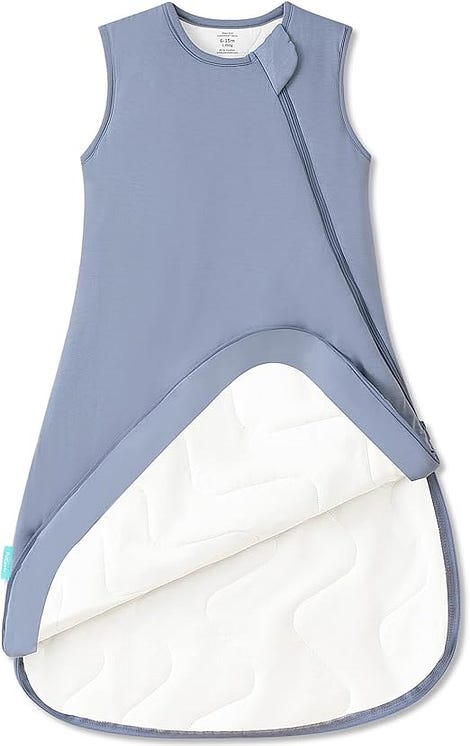
What it is: Special blankets that wrap around babies to help them sleep better.
Why they work: Babies have a startle reflex. Their arms randomly jerk and wake them up. Swaddling keeps their arms contained so they sleep longer.
My story: Nobody told me about the startle reflex. I’d put my son down asleep. Five minutes later, his arms would jerk, he’d smack himself in the face, and he’d wake up crying.
A friend showed me how to swaddle. That night, he slept for a three-hour stretch instead of waking every 45 minutes.
Options:
- Velcro swaddles: Easiest to use, stays on best. Costs $10–15 each.
- Zipper swaddles: Quick for middle-of-night changes. Costs $15–20 each.
- Sleep sacks: For when they’re too old to swaddle (2–4 months). Costs $15–30 each.
Safety note: Stop swaddling when baby can roll over (usually 2–4 months). Switch to sleep sacks at that point.
How many: Buy 3–4 swaddles. That way you always have a clean one available.
11. A Diaper Bag That Actually Works

What it is: A bag designed to hold all the stuff you need when leaving the house with a baby.
What you’ll carry: Diapers, wipes, changing pad, extra clothes, bottles, burp cloths, pacifiers, toys, snacks (later), your own stuff.
My story: I had a cute designer diaper bag. It looked great. But it only had two pockets. Everything jumbled together. I could never find what I needed quickly.
With my second baby, I bought a backpack-style diaper bag with 12 pockets. Everything had a place. I could find things in seconds.
What to look for:
- Backpack style: Leaves hands free for carrying baby
- Lots of pockets: Keeps things organized
- Insulated bottle holders: Keeps milk cold/warm
- Changing pad included: One less thing to remember
- Washable material: Babies are messy
Price range: Basic diaper bags cost $25–40. Really nice organized ones cost $50–80.
Pro tip: Get a neutral color. Then both parents will actually use it.
12. Nail Clippers or Files (Tiny Baby-Sized Ones)
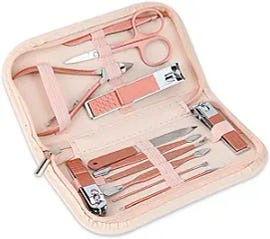
What it is: Small nail clippers or files made for baby fingernails.
Why you need them: Baby nails grow fast and they’re sharp. Babies scratch their own faces. They scratch you. Those tiny nails are weapons.
My story: On day three, my daughter had three scratch marks on her cheek from her own fingernails. I felt horrible.
I tried using regular nail clippers. Her nails were too small and I was terrified of cutting her skin.
Baby nail clippers have rounded edges and are way smaller. Still scary, but manageable.
When to do it: When baby is sleeping or just after a bath (nails are softer).
Pro tip: Some parents just use a nail file. It’s slower but there’s zero risk of cutting the baby’s skin.
Cost: A baby nail clipper set costs $5–10. Cheap insurance against scratched faces.
What About All The Other Stuff?
The baby industry will try to sell you hundreds of things. Some are nice to have. Most are unnecessary.
Things I never used:
- Wipe warmer (room temperature wipes work fine)
- Fancy diaper pail (regular trash can with lid works)
- Bottle warmer (warm water works)
- Baby bathrobe (they’re tiny and don’t need robes)
- Shoes for newborns (they can’t walk, they don’t need shoes)
Things that were nice but not essential:
- Baby swing (some babies love it, some hate it)
- Bouncer seat (helpful but not critical)
- Play mat (nice for tummy time)
- Sound machine (helpful but your phone works too)
My Real Budget Breakdown
If you buy just the essentials on this list, here’s roughly what you’ll spend:
- Car seat: $100–150
- Diapers (first month): $60
- Bassinet or crib: $100–200
- Bottles: $40
- Burp cloths: $30
- Clothes: $100
- Monitor: $70
- Wipes (bulk): $25
- Baby tub: $25
- Swaddles: $40
- Diaper bag: $40
- Nail clippers: $7
Total: About $600–800 for everything you truly need for the first few months.
Yes, you can spend way more. But you don’t have to.
What First-Time Parents Really Need to Know
All the baby products in the world won’t prepare you for the reality of having a newborn.
You’ll be tired. Really tired. You’ll question every decision. You’ll worry constantly. You’ll Google things at 3 AM that seem ridiculous in the morning.
The products on this list won’t fix that. But they will make the daily tasks easier. They’ll give you the right tools to keep your baby safe, clean, fed, and sleeping.
And when you’re running on two hours of sleep, trying to change a diaper with one hand while holding a crying baby with the other, having the right diaper bag nearby with everything organized makes all the difference.
Start With The Basics
You don’t need everything before the baby comes. You can’t even know what you’ll need until they’re here.
Week before baby comes: Car seat, place to sleep, diapers, wipes, a few outfits.
First month: Add bottles, monitor, bathtub, swaddles as you figure out what you need.
After that: Buy things as specific needs come up.
Babies are expensive, but they don’t have to be. Focus on the essentials that keep them safe and healthy. Everything else can wait.
Three kids later, these 12 things are still what I tell every first-time parent to buy. Not because they’re trendy or cute or Instagram-worthy.
But because they actually work when you need them most.
And in those first overwhelming weeks with a newborn, “actually works” is all that matters.