
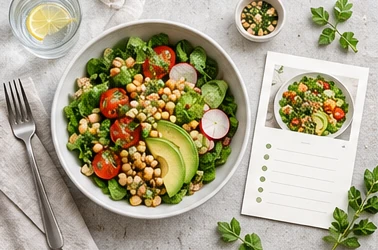
A well-designed recipe blog post helps readers understand a recipe quickly, find the ingredients they need, and follow the cooking process without confusion. Easy and healthy recipe templates for food bloggers make it simpler to publish consistent, helpful content while maintaining an attractive blog design.
Whether you share quick breakfasts, nutritious lunches, vegetarian meals, or family dinners, a reusable template saves time and gives every post a clear structure.

1. Choose a Simple Recipe Blog Post Template
Canva Templates for Food Bloggers
You can place these links directly inside the relevant sections of your WordPress blog post.
1. Recipe Card Templates
Create printable recipe cards with ingredients, cooking times, and instructions.
Explore Canva Recipe Card Templates
2. Food Blog Graphics
Design attractive recipe graphics and featured images for your blog posts.
Explore Canva Blog Graphic Templates
3. Recipe and Food Templates
Find customizable recipe layouts for food blogs, recipe collections, and cooking guides.
4. Food Social Media Templates
Create recipe promotions and food posts to share your latest articles on social media.
Explore Canva Food Post Templates
5. Food Blog Website Inspiration
Explore customizable blog website layouts and find ideas for presenting recipes online.
Browse Canva Blog Website Templates
2. Use Healthy Breakfast Recipe Templates
Breakfast recipes are ideal for food bloggers because readers often search for quick, nutritious meals that fit busy mornings. Create reusable templates for overnight oats, egg muffins, yogurt bowls, smoothies, and whole-grain pancakes.

A healthy breakfast template can include preparation time, servings, ingredients, cooking instructions, and make-ahead tips. For example, an overnight oats recipe should explain how much liquid to add, how long to refrigerate the oats, and which toppings work well.
Use specific, descriptive titles such as “Easy Overnight Oats with Chia Seeds” instead of generic headings like “Healthy Breakfast.” This makes the content more informative and naturally incorporates relevant search phrases.
3. Create Easy Lunch and Dinner Templates
Readers appreciate healthy meals that use everyday ingredients and require manageable preparation. Templates for grain bowls, vegetable soups, chicken salads, lentil curries, and sheet-pan dinners help you publish recipes consistently.

For each recipe, organize the content into clear sections:
- A short introduction explaining the dish.
- Ingredients with accurate measurements.
- Numbered cooking instructions.
- Substitution ideas for different tastes or dietary needs.
- Storage and reheating instructions.
Add useful details, such as how to prevent vegetables from becoming soggy or how to adjust seasoning. These practical tips make your blog more valuable than a basic list of ingredients.
4. Improve Recipe SEO With Helpful Content
Search engine optimization helps readers discover your recipes through relevant searches. However, adding keywords alone will not make a recipe post useful. Focus on answering the questions readers are likely to have.
Follow these recipe SEO tips:
- Use a clear SEO title: Include the main topic naturally near the beginning.
- Write descriptive headings: Organize the article with relevant H2 and H3 headings.
- Optimize images: Use descriptive file names and meaningful alt text, such as “healthy quinoa salad with chickpeas and avocado.”
- Add internal links: Connect related breakfast, lunch, dinner, and meal-prep recipes.
- Use recipe structured data: Implement appropriate Recipe schema to help search engines understand ingredients, instructions, preparation time, and other available details.
- Answer search intent: Include practical information about substitutions, serving sizes, preparation, and storage.
Avoid keyword stuffing and unsupported health claims. Your recipe should be written for people first, with SEO improving its discoverability.
5. Make Your Recipe Images More Useful
Food photography helps readers understand the finished dish and can make a recipe post more engaging. You do not need dozens of images for every article. Choose photographs that support the instructions.

Include a finished-dish photograph near the introduction, ingredient photographs when they add clarity, and process images for important cooking steps. Compress images before uploading them to help your pages load quickly.
Write accurate alt text that describes the actual image. Also, use consistent image dimensions and a clean layout so the article remains readable on mobile devices.
6. Use a Reusable Recipe Card
A recipe card gives readers a convenient place to find the essential cooking details without searching through the entire article.
Your recipe card should contain:
- Recipe name and a short description
- Preparation time, cooking time, and total time
- Serving size
- Ingredients with measurements
- Numbered instructions
- Optional nutrition estimates and recipe notes
If you use WordPress, consider a recipe plugin that supports structured data, printable recipe cards, and clear mobile layouts. Test the output before publishing to ensure that ingredient quantities and instructions display correctly.
7. Build a Consistent Food Blogging Workflow
A repeatable publishing process makes managing a recipe blog easier. Start with keyword research, choose a recipe that matches the reader’s needs, test the recipe, photograph the finished dish, and write clear instructions.
Next, add internal links, optimize images, review the recipe card, and check the page on mobile. Before publishing, verify every measurement and cooking instruction.
You can use one master template for all recipes and adjust individual sections according to the dish. This keeps your content consistent without making every article sound identical.
Conclusion
Easy and healthy recipe templates for food bloggers make it easier to publish organized, attractive, and search-friendly recipes. By combining clear instructions, useful food photography, structured recipe cards, and natural SEO, you can create a better experience for your readers.
Start with one flexible template for breakfast, lunch, and dinner recipes. Improve it using reader feedback and performance data, and focus on publishing recipes that people can confidently prepare and enjoy.